EcoDomeHomes and Memorable Green are proud to announce that Professor Miguel Oliveira, Associate Professor and Director of the Construction Materials Laboratory at the University of the Algarve (Universidade do Algarve), has joined our Board of Advisors. His appointment comes as we open U.S. operations with our first signed letter of intent for structures in New Hampshire, and it brings thirty years of rigorous applied materials science directly to the team behind the M45 protocol.
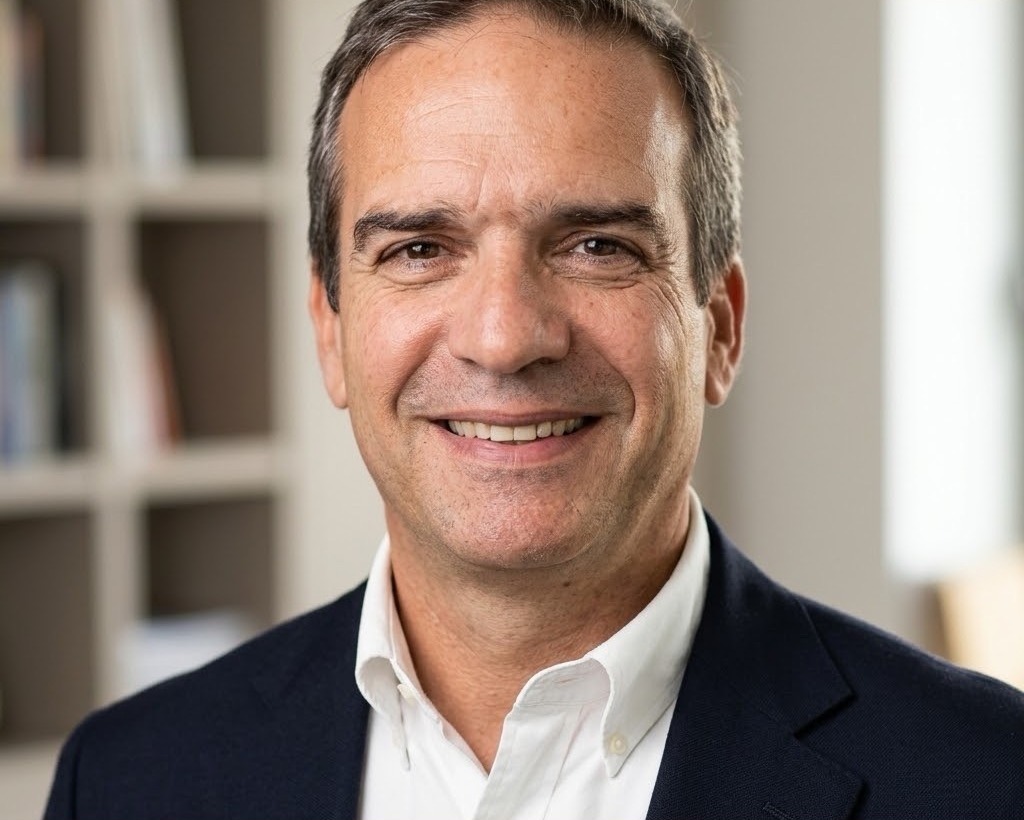
Prof. Miguel Oliveira
Board of Advisors, EcoDomeHomes
Associate Professor, University of the Algarve · Director, Construction Materials Laboratory (since 2004) · PhD Civil Engineering, University of Coimbra · 40+ peer-reviewed publications · Teaching since 1993
Thirty Years on the Cutting Edge of Building Science
The University of the Algarve has been Professor Oliveira's academic home since 1993, and for more than twenty of those years he has directed its Construction Materials Laboratory. In that role, he leads one of Portugal's most active applied research environments dedicated to understanding how building materials perform over time, under structural load, and against the accumulated pressures of environmental degradation.
His credentials are grounded in rigorous scientific work: a doctorate in Civil Engineering from the University of Coimbra, completed with distinction in 2012, and a publication record of more than 40 peer-reviewed manuscripts. Those manuscripts cover concrete technology, sustainable construction materials, recycled aggregates, and thermal insulation systems. That body of work places him at the intersection of fundamental materials science and the urgent practical demands of a construction sector that is long overdue for reform.
Through the University of the Algarve's position within the CRIA incubator, the same incubator where EcoDomeHomes and Memorable Green are resident members, he evaluates new ventures and applied research proposals every year. He has developed a sharp sense for which ideas are genuinely novel and which are dressed-up versions of approaches already tried and found wanting.
The Problem He Has Been Solving for Decades
The core of Professor Oliveira's career-long research position is both straightforward and far-reaching: the dominant approach to reinforced concrete construction is not sustainable, and the primary reason is a materials choice that can be changed.
Conventional reinforced concrete fails by a predictable mechanism. The steel rebar embedded in a structure begins oxidizing the moment moisture reaches it. As it corrodes, it expands, generating internal pressure that fractures the surrounding concrete. A building designed for fifty years may begin showing signs of this failure in thirty. Infrastructure built to last two generations requires major structural rehabilitation before one has passed. The financial and environmental cost of rebuilding what should still be standing is one of the construction sector's most under-discussed contributions to global carbon emissions.
Professor Oliveira has brought this argument to international audiences, including at the CIAR congress in Madrid, where he presented detailed work on how material composition determines concrete's long-term thermal and structural behavior, and what those choices cost across a full building lifecycle. The research conclusion, delivered across three decades of publications and conference stages, has been consistent: concrete's lifespan ceiling is not an engineering inevitability. It is a materials design decision, and it can be redesigned.
How the M45 Protocol Solves It
This is where the M45 protocol becomes directly relevant to Professor Oliveira's work, and why his interest in EcoDomeHomes went well beyond a courtesy visit.
The M45 protocol's patent-pending approach is a direct answer to the failure mechanism that defines the lifespan ceiling of conventional reinforced construction. Our airformed concrete shells are built to resist corrosion and last for generations, rather than being worn down by the oxidation cycle that degrades conventional structures over time.
The structural consequence is not incremental. M45 shells are not governed by the corrosion-driven lifespan that bounds conventional construction. They are engineered for a fundamentally different durability expectation: a multi-century design service life, built to last generations. Where a conventional reinforced concrete building is amortized on a fifty-to-seventy-five year cycle before requiring major structural intervention, an M45 structure is designed to be built once, maintained lightly, and last for generations.
For a scientist who has spent his career mapping how concrete structures fail, the M45 specifications were not a novelty when he encountered them. They were a confirmation. He had followed the same materials science to the same conclusions, from the research direction, that we had reached from the engineering direction. When the two bodies of work met, the common ground was immediate.
“What stood out to me was that Miguel did not need us to explain why our reinforcement approach changes the lifespan equation. He already knew, because he had been researching that exact question for twenty years. When someone with that background says the science is right, it means more than any accelerator acceptance or investor endorsement. It means the foundation is solid.” Christopher Garner, Founder, EcoDomeHomes
Built on a Shared Scientific Foundation
The relationship between Professor Oliveira and EcoDomeHomes did not begin with a cold introduction. Memorable Green is a resident member of CRIA, the entrepreneurship and technology transfer division of the University of the Algarve, housed on the Gambelas campus in Faro. CRIA places academic researchers and real-world entrepreneurs in close and deliberate contact. In that environment, Professor Oliveira encounters new ventures regularly. When the M45 protocol came to his attention within that ecosystem, it stood out: not as a novelty in search of academic cover, but as a technical program whose foundations he recognized from his own body of work.
His decision to join our Board of Advisors reflects that recognition. It is a deliberate choice by one of Portugal's most credentialed construction materials scientists to associate his expertise with a company he believes is building the right way, with the right materials, toward the right outcomes.
What It Means for Our U.S. Expansion
Professor Oliveira joins EcoDomeHomes at a pivotal moment. Our U.S. operation is live, anchored by the first signed letter of intent for dome structures in New Hampshire. The M45 protocol is under active engagement with architects, developers, and regulators on both sides of the Atlantic. Having a credentialed materials scientist with more than three decades of concrete and construction materials research experience available to validate technical specifications, support regulatory conversations, and engage with institutional stakeholders is not a nice-to-have. It is a core operational asset.
His guidance will shape how we communicate the durability advantages of M45 structures to the architects and developers who need to understand them most precisely. His academic standing strengthens our engagement with the broader international research and standards community around next-generation construction materials. And his presence on our Board of Advisors signals, in terms the construction industry understands clearly, that the science behind EcoDomeHomes has been independently examined by one of the people best qualified to do so.
His expertise is not a credential we hang on the wall. It is load-bearing.
← All updates